Threads of Time: The British Makers Breathing New Life into Ancient Craft
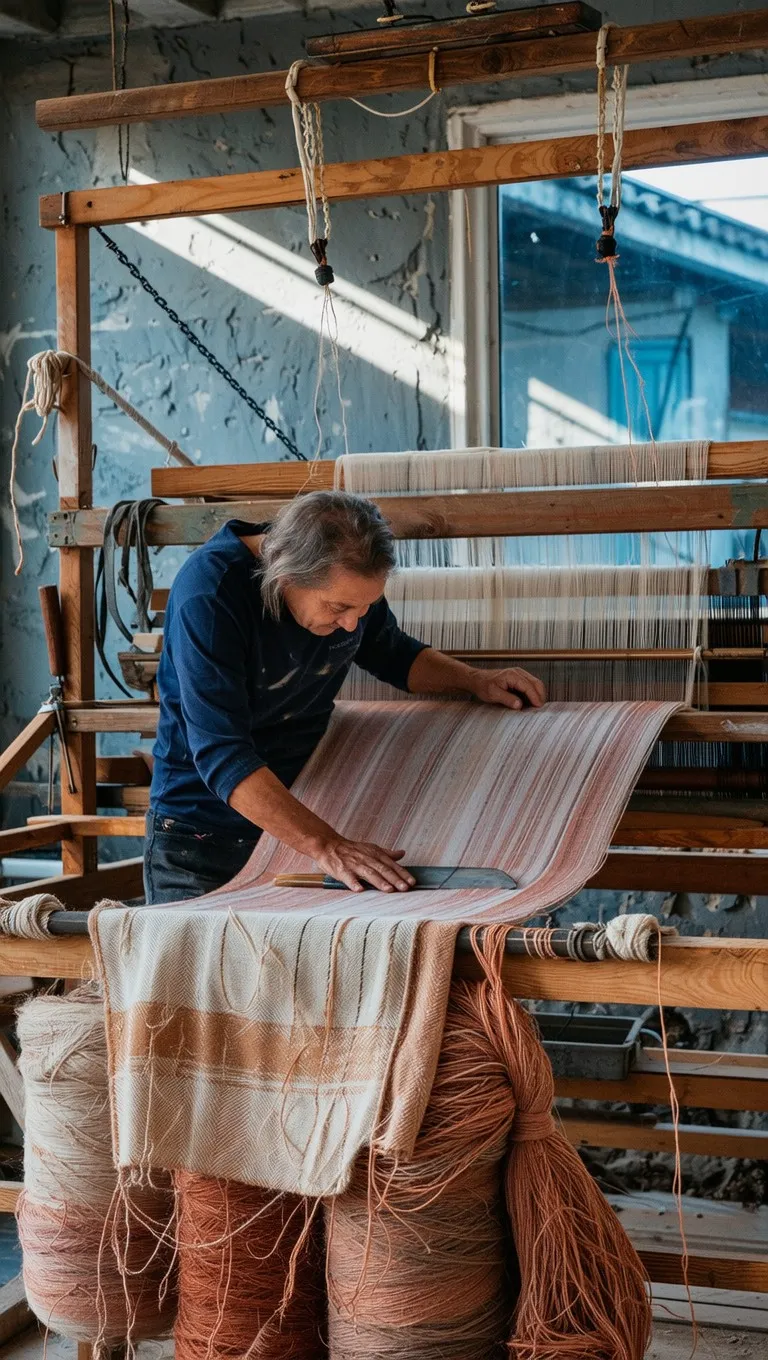
Photo: British artisan hand weaving loom natural textiles workshop studio, via images.stockcake.com
There's a particular kind of satisfaction that comes from wearing something you know took real time to make. Not the fleeting buzz of a fast-fashion haul, but something slower and more grounding — the feeling of holding a piece of genuine human effort against your skin. That's the promise of slow fashion, and right now, a growing community of British artisans is making that promise feel very real indeed.
From hand-loom weavers in the Scottish Borders to natural dyers foraging pigment from hedgerows in Herefordshire, the resurgence of traditional textile craft in the UK is one of the most quietly radical things happening in fashion today. And at Wildewood, it's exactly the kind of story we can't stop thinking about.
The Loom Comes Back
Hand-weaving in Britain has a history stretching back centuries. The wool trade once defined entire regions — think Harris Tweed in the Outer Hebrides, or the silk weavers of Spitalfields whose descendants still trace their roots to Huguenot refugees. For a long stretch of the 20th century, industrial production pushed these skills to the margins. But something has shifted.
Rachel Mossop, a weaver based in the Brecon Beacons, taught herself to use a floor loom after leaving a career in graphic design. "I was burnt out and craving something tactile," she says. "The first time I sat at the loom, I felt this extraordinary sense of connection — like I was doing something my hands had always known how to do."
Rachel now produces small runs of woven throws and scarves using fleece sourced from a nearby hill farm. Each piece takes between two and four days to complete. The patterns she creates are rooted in traditional Welsh geometric motifs, though she reinterprets them with a contemporary looseness that feels entirely her own. "I'm not trying to recreate the past," she explains. "I'm trying to carry something forward."
That distinction matters. The artisans reviving these techniques aren't simply cosplaying heritage — they're translating it, making it relevant to lives lived now.
Colour from the Earth
If hand-weaving represents one thread of this revival, natural dyeing represents another — and perhaps the one with the most to say about fashion's environmental footprint.
Conventional textile dyeing is one of the most polluting processes in the entire fashion supply chain. Synthetic dyes require vast quantities of water and often contain chemicals that are harmful to both ecosystems and the workers handling them. Natural dyeing, by contrast, draws on plants, fungi, and minerals — materials that have been used to colour cloth for thousands of years.
Hannah Birch runs a small natural dye studio in rural Shropshire, where she produces hand-dyed yarn and fabric using ingredients she sources locally or grows herself. Weld for yellow, woad for a soft, dusty blue, walnut husks for rich tobacco browns. Her palette reads like a walk through an English autumn.
"People are often surprised by how permanent the colours are," Hannah tells us. "There's a myth that natural dyes fade quickly, but if you use the right mordants and care for the fabric properly, these colours last for decades. They just evolve gently over time, which I think is part of their charm."
Her pieces don't come cheap — a naturally dyed linen shirt might retail at well over £150 — but Hannah is unapologetic about that. "You're paying for the time, the knowledge, and the fact that nothing harmful went into the water system to make it. That has a value."
The Screen-Print Revival
Not all traditional techniques involve quite the same meditative patience as weaving or dyeing. Screen-printing, which became popular in British fashion during the 1960s and 70s, is enjoying a distinct revival of its own — particularly among makers who are interested in combining heritage methods with bold, nature-inspired imagery.
Sol Akhtar runs Fernprint, a small studio in Sheffield where he produces limited-edition printed garments using water-based inks on organic cotton and linen. His designs — dense botanical illustrations, abstracted woodland scenes, hand-drawn mushrooms and ferns — feel simultaneously retro and completely current.
"There's something about the physical process of screen-printing that you just can't replicate digitally," Sol says. "Every print has a slight variation, a tiny imperfection. That's not a flaw — that's the thing that makes it alive."
He runs occasional workshops out of the studio, teaching the basics to people who've never held a squeegee. Demand, he says, has been overwhelming. "People are hungry to understand how things are made. They want to feel connected to the process."
Why It Matters — Beyond the Aesthetic
The appeal of these handcrafted textiles isn't purely about how they look, though they do look extraordinary. It's also about what buying them means in a broader sense.
Fast fashion's environmental toll is well-documented. The industry is responsible for roughly 10% of global carbon emissions, produces mountains of textile waste, and often relies on exploitative labour practices hidden deep in international supply chains. Choosing a hand-woven throw or a naturally dyed shirt instead of a mass-produced equivalent is, in its own small way, a refusal of all that.
It's also an investment in cultural memory. Many of the techniques being practised by makers like Rachel, Hannah, and Sol were genuinely at risk of being lost within a generation. By learning them, teaching them, and building businesses around them, these artisans are preserving something that belongs to all of us.
Building a Wardrobe That Lasts
There's a practical case to be made here too. Handcrafted pieces, made with quality materials and genuine skill, tend to last significantly longer than their fast-fashion counterparts. A well-made hand-woven scarf, properly cared for, could be part of your wardrobe for twenty years. It might even outlast you.
That changes the maths considerably. A £200 scarf worn hundreds of times over two decades costs far less per wear than a £25 version that pills and falls apart after a season. And it sits far more lightly on the planet.
At Wildewood, we've always believed that style and sustainability aren't in tension — they're deeply complementary. The most enduring pieces in any wardrobe are the ones with a story behind them, the ones that age gracefully and carry meaning. That's exactly what Britain's slow fashion makers are offering.
Where to Start
If you're new to buying handcrafted textiles, it can feel a little daunting. Here are a few thoughts to help you begin:
- Start with accessories. A naturally dyed scarf or a hand-printed tote is a lower-commitment entry point than a full garment, and it lets you experience the quality difference firsthand.
- Follow makers on social media. Many British artisans document their process on Instagram, which gives you a genuine sense of the time and skill involved — and makes the price tag feel completely different.
- Visit craft fairs. Events like the British Craft Trade Fair or local makers' markets are brilliant places to meet artisans in person, ask questions, and find pieces you'd never discover online.
- Think in terms of cost-per-wear. Slow down and ask how often you'll reach for something, rather than just what it costs today.
The threads of Britain's textile heritage are still here, still strong. They just need people willing to pick them up.