Small but Mighty: The British Artisans Crafting Buttons That Deserve to Be Noticed
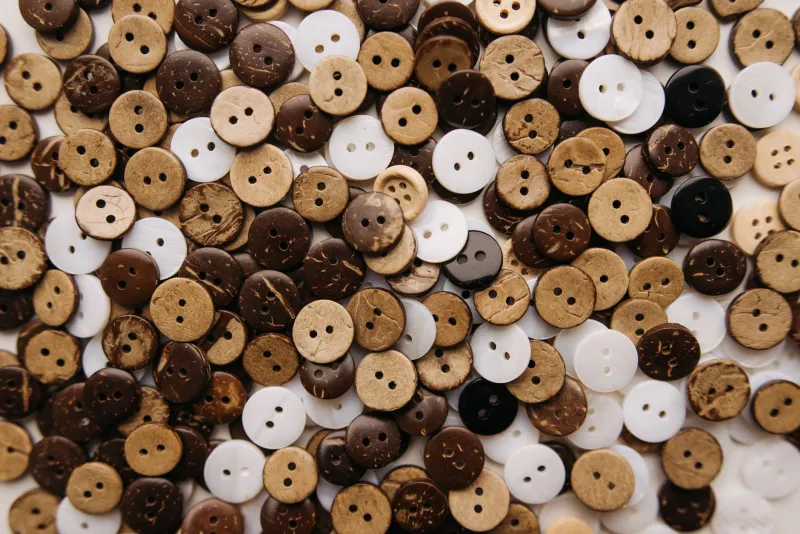
There's a moment, when you're buttoning up a coat on a grey October morning, where your fingers pause. Not because you're in a rush — but because the button beneath your thumb feels different. Warm, somehow. Slightly uneven in the best possible way. Like it was made by a person, not a machine.
That feeling is increasingly rare in a world of fast-fashion fastenings — those thin, hollow discs that crack in the wash and vanish down the back of the sofa. But across Britain, a scattered and quietly passionate community of makers is doing something rather beautiful: they're turning buttons into tiny works of art.
The Craft That Clothes Forgot
For most of fashion history, buttons were a serious business. In Tudor England, they were status symbols — jewelled, gilded, stitched onto doublets to signal wealth and rank. By the Victorian era, whole industries had grown up around their production, particularly in Birmingham, which became the button-making capital of the world. Factories churned out brass, bone, and horn buttons by the thousand, many of them still surfacing in haberdashery jars at antique fairs today.
Then, gradually, the craft contracted. Plastics arrived. Mass production took over. The bespoke button — carved by hand, made to order — became a relic of tailoring's golden age, occasionally glimpsed on a Savile Row commission or a well-preserved vintage coat.
But slow fashion has a way of circling back to what was lost. And right now, buttons are having a quiet, rather lovely renaissance.
Wood, Bone, and the Patience of a Craftsperson
In workshops from the Scottish Highlands to the West Country, makers are returning to the materials that defined button craft for centuries — and finding new, sustainable ways to use them.
Wood is perhaps the most accessible starting point. British makers working with locally sourced offcuts — oak, ash, cherry, yew — are turning lathe-turned discs into objects of genuine beauty. The grain of the wood becomes part of the design. No two are identical. A set of six buttons cut from the same branch will share a lineage, a visual conversation across the front of your jacket.
Bone and antler offer something different: a warmth to the touch, a slight translucency when held to light, and the kind of surface that develops a patina with wear. Responsible makers source these as true offcuts — from deer culled for land management, or from butchers who'd otherwise discard them. There's no sentimentality needed here; it's simply good material stewardship, the same logic that drives nose-to-tail cooking applied to craft.
Reclaimed metals are another thread in this story. Small studios are melting down old jewellery, salvaged brassware, and broken belt buckles to cast new buttons in moulds they've made themselves. The results have a weight and presence that plastic simply cannot replicate — and they carry a kind of layered history, the past life of the object folded into the new one.
Why the Detail Changes Everything
Ask any maker why buttons matter and they'll tell you the same thing in different ways: a garment is only as good as its finishing. The most beautifully cut jacket looks unresolved with the wrong fastenings. Conversely, a simple, well-worn linen shirt is elevated entirely by a set of hand-carved horn buttons.
This is something slow fashion communities have understood for a while — that the details are where intentionality lives. Choosing a bespoke button isn't just an aesthetic decision. It's a statement about how you want to dress, and why. It's the difference between a garment you own and a garment you've invested in.
For those who make their own clothes — and Britain's home sewing community is thriving right now — sourcing handmade buttons has become part of the ritual. It's the final act of care in a process that's already full of it. Plenty of makers report that customers come to them not just for the buttons themselves, but for the conversation: what wood works best with wool? How does antler age? What finish will hold up to daily use?
That knowledge-sharing is its own form of craft.
Communities Built Around a Tiny Object
What's particularly striking about this corner of the making world is how community-minded it tends to be. Button makers — perhaps because their output is inherently collaborative (you need a garment to complete the picture) — seem drawn to connection.
Markets and craft fairs have become important gathering points. Events like the Country Living Fair, independent textile markets, and local haberdashery pop-ups give makers the chance to put their work directly into people's hands — quite literally. The tactile experience of picking up a hand-carved button, feeling its weight, examining the tool marks left by the maker, is something no online shop can fully replicate.
Social media, meanwhile, has allowed these makers to find each other and build small but devoted followings. There's something almost meditative about watching a button being turned on a lathe or seeing a mould being poured — and the makers who share their process tend to draw audiences who are genuinely curious about how things are made, not just what they look like.
Some have gone further, running workshops and short courses that teach the basics of button carving or casting. The response, by most accounts, has been overwhelming. People are hungry for this kind of making — slow, material, connected to something real.
How to Find and Use Handmade Buttons
If you're new to the world of artisan buttons, the best place to start is at the source. Many British makers sell directly through their own websites or at craft markets, and buying direct means you can ask questions, request custom sizes, and understand exactly where your materials have come from.
When choosing buttons for a garment, think about weight and proportion first. A heavy brass button on a delicate cotton blouse will pull the fabric and distort the hang. A small, pale wooden disc might disappear against a chunky tweed. Makers are usually very generous with advice — most of them genuinely love this part of the conversation.
Also worth considering: buttons as a way to refresh something you already own. Replacing the plastic buttons on a vintage coat or a tired blazer with a set of handmade alternatives is one of the most cost-effective ways to transform a garment's character. It takes ten minutes and a needle and thread, and the result can be genuinely transformative.
The Whole Story, Fastened Together
There's something quietly radical about caring this much about a button. It runs counter to the logic of disposability that's shaped fashion for decades — the idea that details don't matter because the whole thing will be replaced before you notice them.
But the makers keeping this craft alive understand something important: objects made with care invite care in return. A button that took someone an hour to carve is a button you'll notice. A button you notice is a button you'll look after. And a garment you look after is one that stays with you — season after season, year after year.
In the end, that's what slow fashion is really about. Not just the big gestures — the organic fibres, the ethical supply chains — but the small ones too. The details that tell the full story of how something was made, and by whom, and why it matters.
Sometimes, that story fits neatly in the palm of your hand.