From Soil to Stitch: The British Smallholders Growing Their Own Fabric
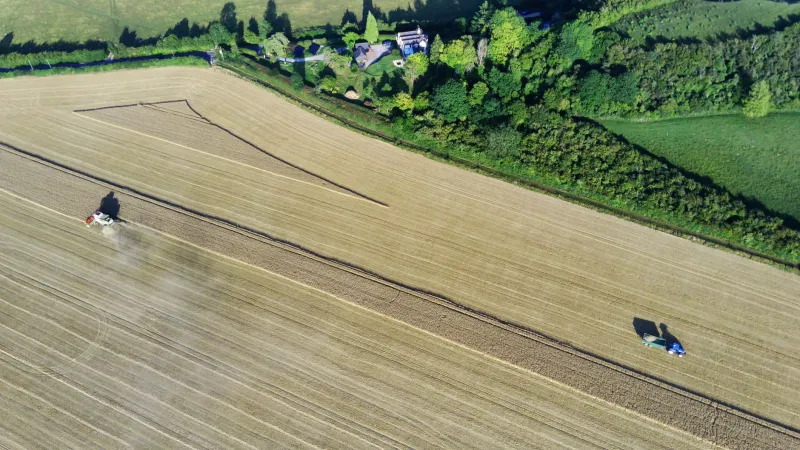
There's a particular kind of satisfaction in wearing something you made yourself. Now imagine going one step further — past the loom, past the spinning wheel, all the way back to a muddy field where you planted the seed in the first place. For a growing number of British smallholders, that's not a romantic fantasy. It's a Tuesday.
Across the UK, from the damp valleys of Wales to the flatter stretches of East Anglia and beyond, independent growers are quietly reviving the cultivation of plant-based textile fibres. Flax and hemp, both of which have deep roots in British agricultural history, are the crops at the centre of this movement — and the people growing them are anything but conventional farmers.
Why Flax and Hemp, and Why Now?
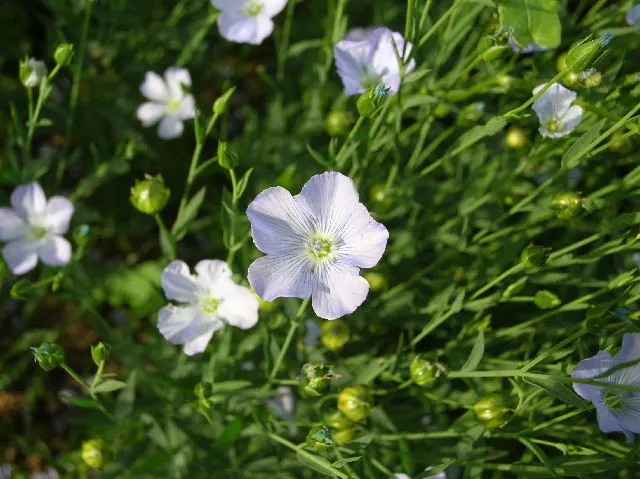
Flax — the plant that gives us linen — was once a staple of British farming. Medieval records are full of it. Hemp, similarly, was cultivated across England for centuries, prized for rope, sailcloth and rough garments long before synthetic alternatives made it seem unnecessary. Both crops fell out of fashion as industrial supply chains made it easier and cheaper to import fibre from overseas. For decades, that seemed like progress.
But the cracks in that model have become impossible to ignore. Long-haul supply chains, questions about pesticide use, and a growing appetite for genuine traceability have pushed a small but passionate community of growers to ask a different question: what if we just grew it here again?
The answer, it turns out, involves a lot of trial and error, a healthy tolerance for uncertainty, and a deep respect for heritage seed varieties that commercial agriculture largely abandoned.
Getting Their Hands Dirty
Take growers like those working with the Flax and Linen Study Group, a UK-based network that connects people experimenting with small-scale flax cultivation. Members range from hobby growers with a few raised beds to smallholders dedicating entire fields to heritage varieties. What unites them is a desire to understand the full journey of a textile — not just from factory to shop floor, but from earth to finished cloth.
Growing flax for fibre is different from growing it for linseed oil, and the learning curve is steep. Timing the harvest matters enormously. The plants need to be pulled — not cut — at just the right stage of ripeness to preserve the long, strong fibres inside the stem. Then comes retting, the process of partially rotting the stalks to loosen those fibres, which can be done in water or by laying the cut flax out on damp grass to dew-ret over several weeks. It's slow, weather-dependent, and deeply satisfying when it works.
Hemp follows a similar path, though it tends to be more forgiving in Britain's variable climate. Its fibres are coarser than flax but extraordinarily durable, and recent years have seen renewed interest in processing techniques that soften hemp enough for use in wearable textiles rather than just industrial applications.
The Heritage Seed Question
One of the most compelling threads running through this movement is the recovery of heritage varieties. Modern commercial flax was bred for oil yield or for the specific conditions of large-scale linen production in places like Belgium and France. The older varieties, some of which are being carefully preserved by seed libraries and specialist growers, behave differently — sometimes better — in British soils and under British skies.
Groups like the Heritage Seed Library, run by Garden Organic, play a quiet but vital role here, maintaining varieties that would otherwise disappear. For textile growers, accessing these seeds is often the first step in an ongoing experiment: Which variety produces the longest fibre? Which one stands up to a wet summer without collapsing? Which one actually wants to grow in your particular corner of the country?
These aren't questions with simple answers, and the growers pursuing them know it. But there's something galvanising about the search itself.
Closing the Loop
What makes this movement genuinely radical — in the quietest, most muddy-booted way possible — is the ambition to close the loop between cultivation and clothing. Most sustainable fashion conversations focus on what happens after a fibre has already been spun, woven or dyed. This community is asking what happens before any of that. Who grew the plant? On what land? With what inputs? And can that person actually be the same person who ends up weaving the cloth?
For some smallholders, the answer is yes. A handful of UK-based makers are now cultivating their own flax, retting and scutching it themselves, spinning the resulting line fibre on hand spindles or small wheels, and eventually weaving or knitting it into finished pieces. The quantities are tiny. The labour is immense. The resulting cloth is, by any conventional measure, extraordinarily expensive to produce.
And yet the people doing it describe it as one of the most meaningful things they've ever made.
What This Means for Textile Makers
Even for those who aren't growing their own fibre — which is most of us — this movement is shifting something important. It's creating a new vocabulary around textile sourcing, one that goes beyond "organic" or "natural" and asks much more specific questions. Where in the country did this flax grow? What variety was it? Who retted it, and how?
A small number of UK spinners and weavers are now actively seeking out domestically grown fibre, even when it costs more and comes in smaller batches than imported alternatives. The relationship between grower and maker becomes part of the fabric's story — sometimes literally, with growers and textile artists collaborating on projects that document the journey from seed to finished cloth.
For anyone drawn to the idea of a wardrobe rooted in place and process, this is about as close to the source as it gets.
The Challenges Are Real
None of this is easy, and it would be dishonest to suggest otherwise. Processing plant fibres at a small scale is labour-intensive in ways that make commercial production look effortless. Equipment — scutching boards, hackles, small-scale decorticators for hemp — can be difficult to source in the UK. Knowledge that was once passed between generations has had to be painstakingly reconstructed from old agricultural manuals and conversations with the handful of people who still remember.
The economics are challenging too. Fibre grown on a smallholding and processed by hand cannot compete on price with industrially produced linen from France or Belgium. It was never going to. The value proposition is entirely different: it's about provenance, connection, and the particular quality of something made with that level of care and attention.
A New Kind of Local
At Wildewood, we're drawn to things that carry a story — pieces that feel like they come from somewhere real. The smallholders growing flax and hemp in their back fields are creating something genuinely new by reaching back into something very old. They're proving that the distance between a seed in the ground and a garment on your body can, if you're determined enough, be measured in footsteps rather than freight miles.
That feels like exactly the kind of fashion we want to be part of.