The Flock Behind the Fabric: Why Knowing Your Wool's Story Changes Everything
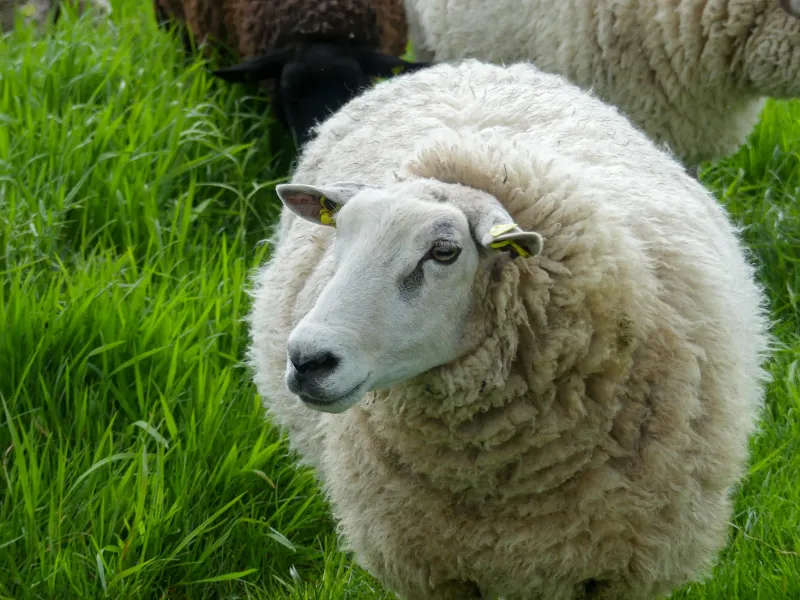
There's a particular kind of magic in pulling on a jumper and knowing, genuinely knowing, that it came from a flock of Herdwick sheep grazing somewhere above the Cumbrian cloud line. Not in a vague, aspirational sense — but in the very real, traceable way that connects a farmer's daily work to the warmth on your shoulders. That connection is what British wool, at its best, is all about. And yet for decades, we've largely ignored it.
Wool fell out of favour. It got lumped in with itchy school cardigans and charity shop smells. Synthetic fibres arrived promising easier care and cheaper prices, and a whole generation quietly moved on. But something has been shifting lately, and it's worth paying attention to.
The Breeds You've Never Heard of (But Should)
Britain is home to more native sheep breeds than any other country in the world. More than sixty distinct breeds, each shaped by centuries of adaptation to specific landscapes — the boggy moorlands of Dartmoor, the limestone dales of Yorkshire, the salt-licked headlands of coastal Wales. These aren't just agricultural curiosities. They're living repositories of textile heritage.
Take the Bluefaced Leicester, a breed whose fleece produces a lustrous, fine yarn prized by hand spinners across the country. Or the Soay, a primitive breed from the St Kilda archipelago whose wool is so fine it was historically plucked rather than shorn. Then there's the Rough Fell, the Swaledale, the Manx Loaghtan — each with its own character, its own weight, its own relationship to the land that shaped it.
When you buy a garment labelled simply 'wool', you have no idea which of these animals gave that fibre. It could be a Merino from Australia, blended with synthetics in a factory in Bangladesh. There's nothing inherently wrong with that, but it's a very different thing from a single-breed, single-farm British yarn — and the difference matters enormously, both in terms of quality and in terms of who benefits.
The Economics of the Fleece
Here's a fact that tends to stop people in their tracks: many British sheep farmers currently receive less for a fleece than it costs them to have the animal shorn. The British Wool board sets minimum prices, but for lower-grade fleeces, the return can be as little as a few pence per kilogram. Shearing, by contrast, costs considerably more. In real terms, wool has become a byproduct — something farmers deal with rather than profit from.
This wasn't always the case. For centuries, wool was Britain's most valuable export. The wealth it generated built churches, funded wars, and shaped the entire economy of medieval England. The woolsack in the House of Lords — the Lord Speaker's seat — is a literal symbol of how central wool once was to national prosperity. That history didn't vanish overnight, but it has been thoroughly dismantled by the rise of global synthetic fibre production.
Supporting British wool brands and makers who source locally isn't just a lifestyle choice. It's a direct economic intervention in rural communities that are quietly struggling. Every time you choose a British-wool garment from a maker who names their farm or their breed, some of that value flows back to the hills where it started.
Debunking the Itch Myth
The scratchy jumper problem is real, but it's not the whole story — and it's certainly not an argument against wool as a category. It's an argument against low-grade, poorly processed wool in poorly designed garments.
Fine British wools, particularly those from breeds like the Bluefaced Leicester or the increasingly celebrated Bowmont (a cross between Merino and Shetland), are genuinely soft against the skin. Shetland wool, often misunderstood as coarse, comes in a remarkable range of grades, and the finest Shetland fibre has a delicacy that rivals cashmere. The key is knowing what you're buying, and buying from makers who are transparent about their sourcing.
Wool also does things no synthetic can replicate. It regulates temperature naturally, wicking moisture away from the body and releasing it gradually. It resists odour without chemical treatment. It's naturally fire-resistant. It biodegrades completely at the end of its life, returning to the soil without leaving microplastic traces. For a fabric that's been written off as old-fashioned, it's remarkably well-suited to the demands of modern, conscious living.
Regional Traditions Worth Preserving
British wool isn't a single thing — it's a patchwork of regional traditions, each with its own techniques and aesthetics. Fair Isle knitting from Shetland, with its intricate geometric patterns worked in undyed natural shades. Welsh tapestry weaving, bold and geometric, produced on dobby looms that have been running in mid-Wales mills for generations. The tweeds of the Scottish Borders, woven in towns like Hawick and Selkirk where the textile industry has been the backbone of community life for centuries.
These traditions are endangered not because they lack relevance, but because they lack economic support. When we treat wool as a commodity to be sourced as cheaply as possible, we drain the resources that keep these skills alive. When we invest in regionally specific, craft-made British wool goods, we become part of the infrastructure that allows them to continue.
At Wildewood, this is the kind of fashion story we find genuinely compelling — not the surface-level aesthetics of 'rustic' or 'artisan', but the actual, material reality of who makes things, how, and why it matters.
How to Start Buying Better
You don't have to overhaul your entire wardrobe overnight. But there are a few simple questions worth asking before your next wool purchase.
Where was this wool grown? Can the maker name the farm, the region, or at least the country of origin? Is it a single breed, or a blend? Has it been processed in the UK, or sent overseas for spinning and dyeing? These questions aren't designed to trip anyone up — they're invitations for makers to tell a better story, and for consumers to hear it.
Look for brands working directly with British farms. Seek out the British Wool mark, which guarantees the fibre was grown and processed in the UK. Buy from independent makers and small mills who publish their supply chains openly. And when you find a jumper, a blanket, a scarf that comes with a real story — a named farm, a specific breed, a place you could theoretically visit — hold onto it. That's not just a purchase. It's a relationship.
The flock behind the fabric has always been there. We just stopped looking. It's time to look again.