Warp and Weft of Yesterday: The British Mills Rescuing Fabrics That Nearly Vanished Forever
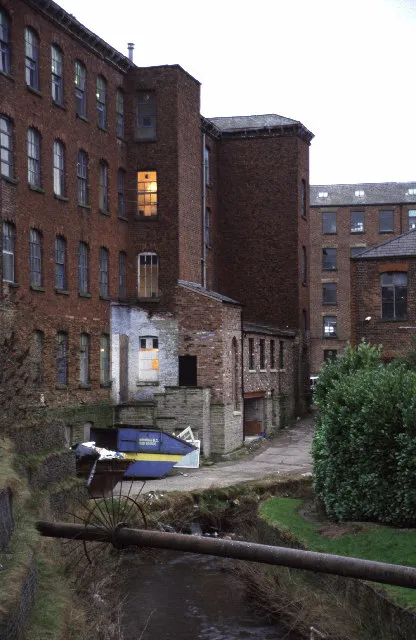
Photo: Chris Allen, CC BY-SA 2.0, via Wikimedia Commons
There's a particular quality of light in an old mill archive. Dusty, amber-tinged, filtered through windows that haven't been cleaned since the Thatcher years. And under that light, stacked on wooden shelves like sleeping things, are bolts of fabric that no one has touched in a generation. Boucle tweeds in colours that don't exist in any Pantone catalogue. Wool-silk blends woven on looms that have long since been dismantled. Fabrics your grandmother might have had made up into a good coat for a Sunday occasion.
Across the north of England, Scotland, and Wales, a small but determined group of mill owners, archivists, and independent designers are making it their mission to wake these textiles up — and in doing so, they're asking a quietly radical question: what if sustainability isn't always about making something new, but about remembering what we already had?
The Archive as a Living Resource
The British textile industry has a habit of hoarding, and for once, that's a very good thing. Mills in Yorkshire's Spen Valley, in the Borders of Scotland, and along the Welsh valleys have been accumulating rolls of unsold or sample fabric for well over a century. Some of it is deadstock — material produced but never purchased. Some of it is what archivists call "mill samples": small-run weaves created to test a technique or show a buyer, then quietly shelved when the order didn't come through.
For the designers who've discovered these stashes, it's less like shopping and more like archaeology.
"You pull out a roll and you genuinely don't know what you're going to find," says one independent designer based in Leeds who sources exclusively from mill archives. "Last autumn I found a mohair-and-lambswool blend from the early 1980s in the most extraordinary shade of lichen green. It had never been cut. The whole story of why it wasn't used is lost — but the fabric itself is perfect."
This is the quiet magic at the heart of the heritage revival. Each rediscovered textile carries with it an invisible biography: the hands that set the loom, the buyer who passed, the warehouse shelf that became an accidental time capsule.
Weaves That Fell Out of Fashion — and Why They Matter Now
Not all forgotten fibres are simply dormant trends. Some represent weaving techniques that were genuinely falling out of production — skills that require specialist knowledge to execute and which, once lost, are extraordinarily difficult to recover.
Harris Tweed, of course, has its own protected status and a fierce community of weavers keeping it alive on the Outer Hebrides. But less celebrated are the intricate dobby weaves once produced in Huddersfield, the fine worsteds of Bradford's heyday, and the peculiar warmth of Welsh double-weave blanket cloth — a thick, reversible textile that was once a staple of rural households and has since all but disappeared from commercial production.
A handful of mills are now working with textile historians and craft organisations to document these techniques before the last practitioners retire. The goal isn't museum-piece preservation — it's active revival. Some are partnering with fashion design students to interpret heritage weaves through a contemporary lens, creating collections that feel rooted in place and time without being nostalgic in a fusty way.
There's a distinction worth drawing here. Nostalgia looks backwards with longing. This is something different — a kind of material memory, an acknowledgment that the ingenuity embedded in these fabrics has value precisely because it was hard-won.
The Circular Logic of Deadstock
Beyond the romantic appeal, there's a compelling sustainability argument for working with deadstock and archive fabric. Every metre rescued from a mill shelf is a metre that doesn't require new water, new dye, new energy to produce. In an industry responsible for around 10% of global carbon emissions, that matters.
But the designers doing this work are careful not to let the environmental credentials overshadow the craft story. "People sometimes come to deadstock fashion thinking it's just eco-friendly fast fashion with a better PR story," says one Yorkshire-based label founder who works almost entirely with mill surplus. "What we're actually doing is much slower and more particular than that. You're constrained by what exists. You design around the fabric, not the other way around. It completely changes how you think about clothes."
That constraint, paradoxically, produces some of the most inventive contemporary British fashion. When you can't just order another 500 metres in a different colourway, you learn to be precise. You cut carefully. You think about every seam.
Who's Leading the Way
Several British makers are worth following if this world interests you. Abraham Moon & Sons in Guiseley, West Yorkshire — one of the last vertical woollen mills in the country — has been quietly collaborating with independent designers who want access to their archive and their specialist looms. The Cambrian Factory in Llanwrtyd Wells has become something of a pilgrimage destination for those interested in Welsh heritage weave, producing blankets and cloth on Victorian-era machinery using traditional patterns.
In Scotland, the Knockando Woolmill in Speyside operates as both a working mill and a museum, producing cloth on restored nineteenth-century looms and offering visitors a rare chance to see heritage textile production in real time.
And threading between these established names is a growing network of independent designers — many of them women, many of them working outside London — who are quietly building careers on the foundation of Britain's industrial textile past.
What You Can Do
You don't need to be a designer to participate in this revival. Buying from labels that use deadstock or archive fabric is the most direct form of support. Asking questions — where does this cloth come from, who wove it, what mill does this represent — creates accountability and keeps the conversation alive.
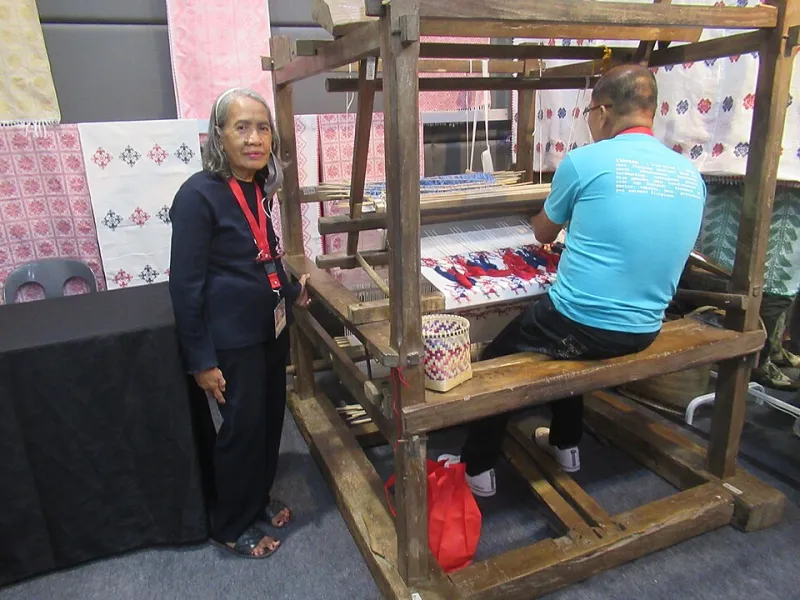
It's also worth visiting mills when you can. Many offer open days or guided tours, and spending an afternoon watching a loom at work is genuinely one of the more grounding experiences available in modern British life. There's something about the rhythm of it — the shuttle, the heddle, the slow accumulation of cloth — that recalibrates your relationship with what it means to make something.
Your grandmother's wardrobe wasn't built on fast fashion. It was built on cloth that was meant to last, sourced from an industry that took its craft seriously. The mills that survive today are the keepers of that knowledge. The designers working with them are its translators.
The fabric is there, waiting on the shelf. Someone just needs to unroll it.