Stitch by Stitch: Why Hand Embroidery Is Fashion's Most Radical Act
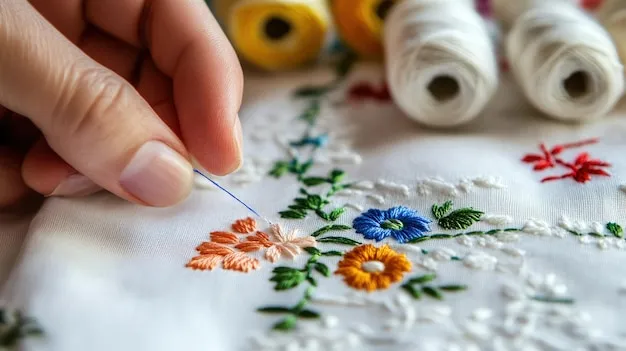
Photo: hand embroidery close up needle thread botanical fabric artisan studio, via img.freepik.com
There's something almost defiant about pulling a needle and thread through cloth in 2025. In an industry that measures success in units per minute and clicks to cart, the deliberate slowness of hand embroidery feels — well — quietly revolutionary. Across Britain, a growing community of independent makers is reclaiming the craft, not as a nostalgic hobby, but as a serious, considered response to the excesses of mass production.
This isn't your grandmother's embroidery circle, though there's nothing wrong with that either. This is embroidery as ethics. Embroidery as activism, stitched one French knot at a time.
The Trouble with Fast Textiles
Before we talk about what hand embroidery offers, it's worth understanding what it's pushing back against. The global textile industry is one of the most polluting on the planet, responsible for an estimated 10% of global carbon emissions and producing mountains of synthetic-fibre waste that won't break down for centuries. Much of the decorative detailing on mass-market clothing — the embroidered logos, the printed florals, the sequinned panels — is machine-made in factories operating under conditions that remain opaque to most consumers.
When you buy a high-street blouse with embroidered cuffs, the odds are those stitches were produced at speed by industrial machinery, likely overseas, with no traceability and precious little accountability. The result looks decorative. But the story behind it rarely is.
Hand embroidery, by contrast, is inherently traceable. You know exactly whose hands made it — and often, you can ask them directly.
Meet the Makers
Sophie Alderton works from a light-filled studio in rural Shropshire, surrounded by reference books, botanical prints, and baskets overflowing with hand-dyed threads. She began embroidering seriously during the first lockdown and hasn't stopped since. Her pieces — intricate woodland scenes stitched onto organic linen — sell out within hours of being posted online.
"People are hungry for something real," she says. "Something that has a person behind it. When someone buys one of my pieces, they're not just buying a pretty thing. They're buying the six hours I spent in this room, thinking about it, making decisions, getting it wrong and starting again."
That time investment is central to the ethics of slow stitching. Sophie charges accordingly — a medium-sized embroidered panel starts at £180 — and she's unapologetic about it. "If something costs less than a cup of coffee, someone somewhere is being underpaid. That's just maths."
Further north, in a former mill town outside Leeds, Priya Sharma runs a small collective called Threadbare & Thriving, where she teaches traditional South Asian embroidery techniques alongside British crewelwork. For Priya, the ethical dimension of hand embroidery extends beyond environmental concerns into cultural preservation.
"So many of these techniques are endangered," she explains. "Not just British ones — globally, we're losing embroidery traditions because there's no economic model to sustain them. Teaching them, charging fairly for finished work, building a community around them — that's how you keep them alive."
Slow Stitching and the Mind
Ask almost any hand embroiderer about their practice and the conversation will eventually drift toward mental health. There's a reason for that. The rhythmic, repetitive nature of needlework has well-documented calming effects, reducing cortisol levels and encouraging the kind of focused, present-state awareness associated with mindfulness practice.
Dr. Emma Kaur, a psychologist who has written about craft and wellbeing, describes it as "active rest" — a state in which the hands are occupied but the mind is gently released from the anxious churn of modern life. "It's not dissimilar to meditation," she notes, "but it produces something tangible at the end. That combination of process and product is enormously satisfying for most people."
For many of the makers we spoke to, this dimension of the work is inseparable from its ethics. Making slowly, making mindfully, making with intention — these values run through both the craft and the broader sustainable fashion movement like a single, continuous thread.
Wearing the Work
Of course, embroidery doesn't have to live in a frame. Increasingly, British designers are incorporating hand-stitched details into wearable pieces — jackets, dresses, bags, and accessories that carry real handmade credentials. The shift is subtle but significant: rather than embroidery as embellishment, it becomes embroidery as the point.
London-based designer Cara Finch creates limited-edition garments in which the embroidery is structurally integral — botanical motifs that follow seam lines, stitched repairs that turn visible mending into a design feature. Her pieces are expensive, deliberately so, and she talks about cost-per-wear with evangelical fervour.
"Buy one piece that lasts a decade and tells a story versus ten pieces that fall apart in a season," she says. "The maths isn't complicated. The only thing that makes the expensive option feel inaccessible is the culture we've built around cheap fashion."
How to Support the Slow Stitch Movement
You don't need to spend hundreds to engage with this world. Here are a few ways to get involved:
- Buy directly from makers. Platforms like Not On The High Street and independent maker websites ensure your money reaches the person who made the thing.
- Learn the craft yourself. Community embroidery workshops are popping up everywhere, from village halls in Devon to creative spaces in Manchester. Even a basic running stitch can transform a tired garment.
- Repair rather than replace. Visible mending — using embroidery to patch and reinforce worn clothing — is having a genuine moment, and for good reason. It's free (or nearly), creative, and deeply satisfying.
- Ask questions. When you see embroidered details on a garment, ask where they were made. Transparency matters, and your curiosity creates accountability.
The Bigger Picture
What makes the hand embroidery revival so compelling isn't just the beauty of the work — though the work is genuinely beautiful. It's the values threaded through every stitch. Slowness as resistance. Craft as care. The decision to pay fairly, to make sustainably, to choose something with a human story over something churned out by a machine in a factory you'll never see.
In the Wildewood spirit of things made by hand, rooted in landscape and tradition, there's something deeply resonant about this movement. Britain has a rich needlework heritage — from Tudor crewelwork to Victorian Berlin wool work — and the makers reviving it aren't simply looking backwards. They're stitching a new future, one careful, considered stitch at a time.
And honestly? That feels like exactly the kind of fashion we need right now.