Colour from the Countryside: Britain's Natural Dye Revival Is Changing Everything
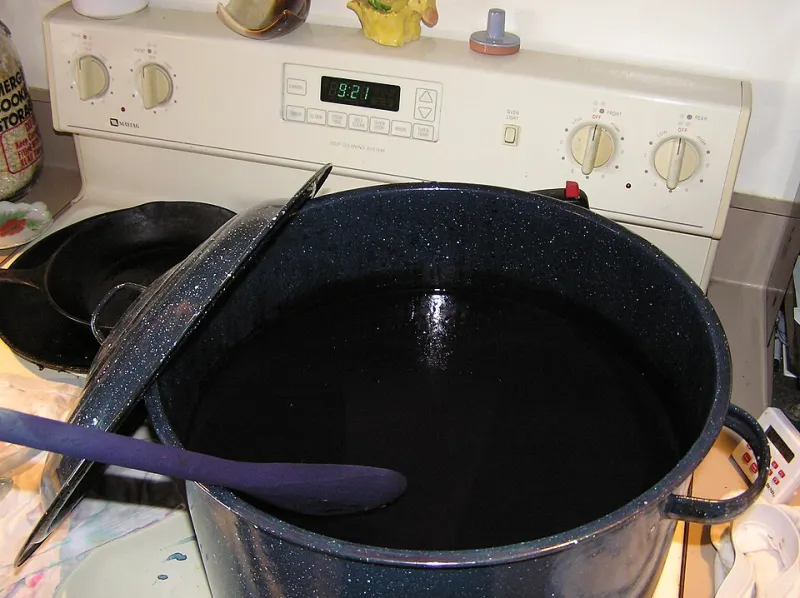
Photo: Loggie-log, Public domain, via Wikimedia Commons
Colour, when you think about it, is where fashion begins. Before the cut, before the construction, before any of it — there is colour. And for most of the twentieth century, the colour in your clothes almost certainly came from a synthetic dye, developed in a lab, derived from petrochemicals, and processed in ways that leave rivers in dyeing regions running vivid, toxic shades of whatever's trending this season.
But something is shifting. Quietly, persistently, and with considerable beauty, a growing cohort of British designers and makers is turning away from synthetic pigments and back to the land. To the hedgerow. To the kitchen garden. To the forest floor. Natural dyeing — one of humanity's oldest crafts — is having a renaissance, and it's bringing with it a palette that no Pantone chart could ever quite replicate.
What's Wrong with Synthetic Dye?
To understand why natural dye matters, it helps to understand what it's replacing. Synthetic dyes, introduced commercially in the mid-nineteenth century, transformed fashion. They were bright, consistent, affordable, and easy to scale. They also ushered in a new era of industrial pollution. Textile dyeing and finishing is estimated to account for up to 20% of global industrial water pollution, with untreated wastewater — laden with heavy metals, fixatives, and synthetic compounds — discharged into waterways in countries with weaker environmental regulation.
Even in the UK, the legacy of the dye industry on waterways and ecosystems is significant. And while domestic manufacturing has contracted enormously since the industrial peak, British designers who source globally are still, in effect, participating in that system.
Natural dyes sidestep much of this. Plant-based pigments are biodegradable, often require mordants (fixatives) that are far less toxic than their synthetic counterparts, and — crucially — they can be grown or foraged in ways that actively benefit local ecosystems.
The Forager's Palette
Britain, it turns out, is extraordinarily generous when it comes to natural colour. The landscape is a dye garden hiding in plain sight.
Weld (Reseda luteola), a tall yellow-flowering plant that grows wild on chalky ground across southern England, produces one of the most stable natural yellows known to dyers — it was used to colour cloth in Britain for centuries before synthetic alternatives arrived. Woad (Isatis tinctoria), famously associated with ancient Britons, yields a soft, dusty blue that bears little resemblance to its dramatic cultural reputation but has a quiet, earthy beauty all its own. Elderberries, blackberries, nettles, bracken, birch leaves, onion skins, dock root — the list of native British dye plants is long and surprising.
Hannah Vickers, a natural dyer based in the Cotswolds, spends much of spring and summer foraging. Her small-batch yarn and fabric collections are organised not by colour name but by plant and season — a range might include "Elder, September" or "Weld, July," with the date and location of the harvest noted on the label. It's an approach that turns a skein of yarn into something closer to a provenance document.
"Every batch is different," she explains. "The same plant, the same mordant, different water, different season — you get a different result. That's not a flaw. That's the whole point. You're working with living material, and it behaves like living material."
The Science Behind the Magic
Natural dyeing is, at its heart, chemistry — and it rewards the curious. Most plant dyes require a mordant to bond the pigment to the fibre. Alum (aluminium sulphate) is the most commonly used, producing bright, clear colours with relatively low environmental impact. Iron mordants shift colours toward greens and greys; copper deepens and enriches. Tannin-rich materials like oak galls or black tea can act as a pre-mordant for protein fibres like wool and silk.
The dye process itself is meditative — simmering plant material to extract colour, straining, adding mordanted fibre, and watching the transformation happen slowly in the pot. It demands attention, patience, and a willingness to be surprised. Unlike synthetic dyeing, where you input a formula and receive a predictable output, natural dyeing involves genuine collaboration with your materials.
This unpredictability is, for many makers, precisely the appeal. "You can't brute-force it," says textile designer Rowan Ashby, who runs natural dye workshops from her studio in the Peak District. "You have to be present. You have to observe. It's completely unlike any other part of the design process."
Designers Leading the Way
Beyond the workshop and the small-batch studio, natural dyes are beginning to make inroads into the wider British fashion landscape. A handful of independent designers are building their entire practice around plant-based colour, and the results are striking.
Edinburgh-based knitwear designer Fiona MacRae works exclusively with naturally dyed Scottish wool, sourcing her fibres from small farms and her dye plants from a combination of cultivation and careful foraging. Her palette — soft heathers, warm ochres, quiet mossy greens — reads as unmistakably Scottish, rooted in the landscape that produces it.
"I think that's the thing people respond to," she says. "The colours feel like somewhere. They feel like weather and soil and season. Synthetic dyes can do bright and consistent, but they can't do that."
In Bristol, a collective called Roothue is experimenting with urban foraging — finding dye plants in parks, allotments, and scrubland within the city — and using the resulting colours in a small line of naturally dyed linen garments. Their approach is deliberately local and low-impact, a proof of concept that natural colour doesn't require a rural idyll.
Trying It Yourself
If all of this has you eyeing the onion skins in your kitchen with new interest, good. Natural dyeing is genuinely accessible as a home practice, and it's a brilliant entry point into thinking differently about where colour comes from.
A few starting points:
- Onion skins (yellow onion) produce a rich, warm gold on wool or cotton mordanted with alum. They're one of the most reliable and beginner-friendly dye materials available.
- Avocado skins and stones yield a surprisingly beautiful dusty pink — a fact that continues to delight most people who discover it.
- Nettles, abundant across Britain from spring through autumn, produce soft greens and yellows depending on mordant and fibre.
- Books to explore: A Dyer's Garden by Rita Buchanan and Wild Colour by Jenny Dean are both excellent introductions to the craft.
Most importantly: embrace the variation. A naturally dyed piece will never be perfectly uniform, and that's not a defect — it's evidence of the process, the plant, the season, and the hands that made it.
A Different Relationship with Colour
What the natural dye revival ultimately offers isn't just a more sustainable way to colour cloth. It's a different relationship with colour altogether — one rooted in place, in season, in the particular quality of light and soil and rainfall that makes the British countryside what it is.
At Wildewood, we've always believed that the most beautiful things carry the mark of the landscape they come from. Natural dye is that idea made literal: colour drawn directly from the earth, from the hedgerow, from the garden — and worn, quite literally, as a piece of where you live.
The synthetic palette will always have its place. But for those of us drawn to something earthier, more particular, more alive — the hedgerow has been waiting patiently, full of colour, all along.