Woven Without Borders: The British Mills Keeping the World's Rarest Textiles Alive
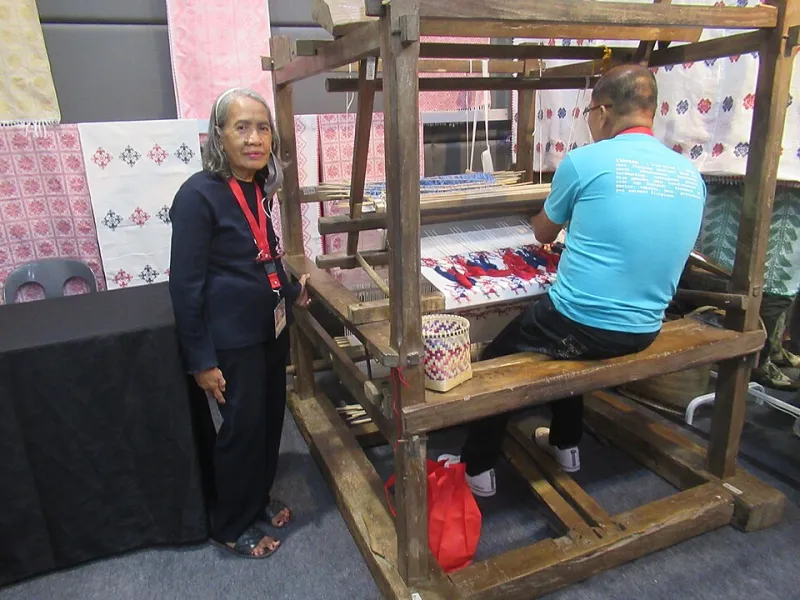
Photo: SJasminum, CC BY-SA 4.0, via Wikimedia Commons
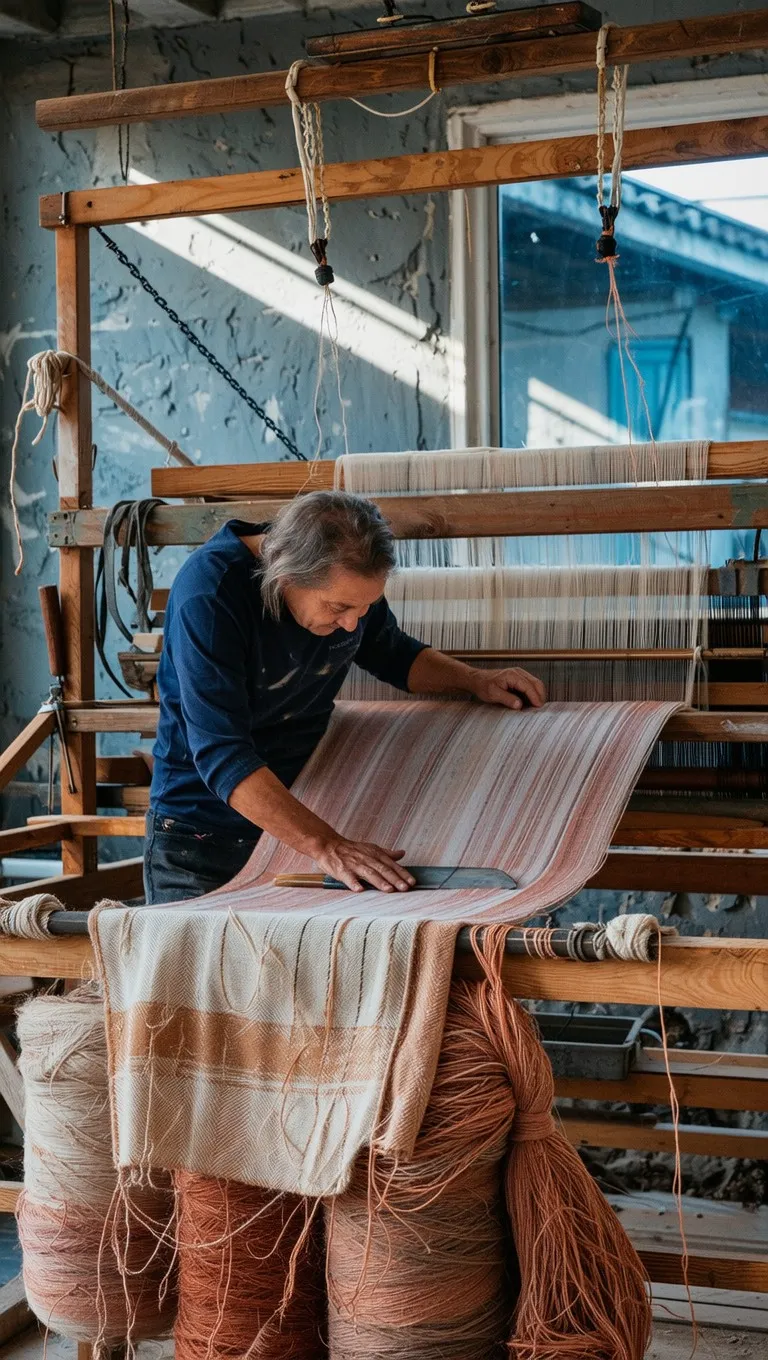
There is a particular kind of silence that lives inside a weaving shed. The rhythmic clatter of a shuttle, the soft resistance of warp threads under tension — it is a sound that connects every human civilisation that has ever clothed itself. And right now, in converted barns in Yorkshire, small studios in the Scottish Borders, and community workshops in Wales, that ancient conversation is being expanded in the most unexpected direction.
British weavers are learning to speak in other tongues.
A Crisis Hidden in Plain Sight
Across the globe, textile traditions that took centuries to develop are disappearing within a single generation. The reasons are familiar: industrial competition, rural depopulation, ageing practitioners with no apprentices, and fast fashion's relentless appetite for synthetic shortcuts. UNESCO estimates that hundreds of traditional textile techniques are at critical risk right now, from the supplementary weft weaving of Southeast Asia to the intricate resist-dyeing methods of West Africa.
What makes this loss particularly devastating is that these traditions are not simply aesthetic. They encode ecological knowledge — which local plants yield which colours, how to read the seasons through fibre — as well as social histories, spiritual symbolism, and generations of refined technical intelligence. When the last practitioner of a particular weave structure puts down their shuttle for good, an entire archive disappears.
Some British makers have decided that is not acceptable.
Learning to Listen First
The movement happening in UK mills is not — and this distinction matters enormously — about appropriating global techniques for commercial gain. The weavers doing this work are at pains to make that clear. What they describe, almost universally, is a process of exchange rooted in genuine relationship.
Take the growing number of UK textile studios that have established formal knowledge-sharing partnerships with craft cooperatives in India. The double ikat technique — in which both warp and weft threads are resist-dyed before weaving, requiring extraordinary precision to produce a coherent pattern — is one of the most technically demanding textile processes in existence. In the Patan region of Gujarat, Patola silk ikat has been produced by just a handful of families for over 700 years. Several British weavers have spent extended periods working alongside these families, not to extract a technique but to understand the philosophy behind it: the patience, the acceptance of imperfection, the understanding that the cloth is already present in the thread.
They bring that understanding home. The resulting fabrics are not imitations of Patola silk. They are British cloth inflected with a different way of thinking about time.
Japan, Indigo, and the Long Way Round
Japanese indigo dyeing — specifically the aizome tradition practised in regions like Tokushima — has similarly found its way into the vocabulary of several independent British dyers and weavers. The process is painstaking: fermenting indigo in large vats, building colour through repeated immersion and oxidation, reading the state of the vat the way a baker reads dough. It produces blues of extraordinary complexity, colours that deepen with wear and washing rather than fading.
For British makers already working with woad — our own native indigo plant, experiencing a quiet revival of its own — the Japanese tradition offers a parallel grammar. Some UK studios are now growing woad alongside Japanese indigo (Persicaria tinctoria) in their own plots, combining the fermentation knowledge absorbed from Japanese partners with local plant material. The result is cloth that carries two geographies in a single thread.
This is, incidentally, also deeply sustainable. Natural indigo sequesters carbon during growth, requires no petrochemical fixatives, and produces wastewater that can be composted rather than treated as hazardous effluent.
The Employment Argument
Beyond the cultural and ecological dimensions, there is a straightforward economic case for this kind of weaving revival. The British textile industry shed the vast majority of its workforce during the latter half of the twentieth century, and many of the communities built around mill towns — in Lancashire, the Borders, the Welsh valleys — have never fully recovered.
Small-scale artisan weaving does not replace industrial employment in volume. But it creates something arguably more durable: skilled, meaningful work that is difficult to automate and impossible to offshore. When a mill in Huddersfield trains a new weaver in supplementary weft techniques learned from a Cambodian silk cooperative, that skill stays in Huddersfield. It becomes part of the local craft inheritance.
Several of the studios engaged in this cross-cultural work also run community apprenticeship programmes, specifically targeting young people from backgrounds underrepresented in the craft sector. The knowledge flows in multiple directions at once.
What You're Actually Buying
For the person standing in a shop — or browsing a carefully curated website at midnight — all of this has a practical dimension. When you invest in a piece of cloth that has emerged from this kind of process, you are not simply purchasing a textile. You are participating in an act of cultural preservation.
That is worth understanding concretely. The bolt of handwoven fabric that becomes your winter jacket may carry within its structure a tie-resist technique that was nearly lost in a village in Oaxaca. The scarf that becomes your everyday companion might embody a twill variation that a Scottish weaver spent three years learning from a Bhutanese master. These are not marketing narratives. They are the actual biography of the cloth.
Ask questions when you shop. Where did this technique come from? Who taught it? Is there an ongoing relationship with the originating community? Good makers will have good answers, because they have thought hard about exactly these questions themselves.
The Loom as Common Ground
There is something quietly hopeful about the image of a Yorkshire weaving shed where a shuttle carries a pattern logic first developed on the other side of the planet. Not hopeful in a naive, kumbaya sense — the politics of cultural exchange are genuinely complex and require constant attention — but hopeful in the sense that human ingenuity, when it flows freely between traditions rather than being hoarded by any single one, tends to produce things of remarkable beauty and resilience.
The world's textile heritage belongs, in some essential sense, to all of us. The British makers working in this space are simply taking that responsibility seriously, one carefully thrown shuttle at a time.