Hands That Heal: The British Tailors Giving Your Favourite Clothes a Second Lifetime
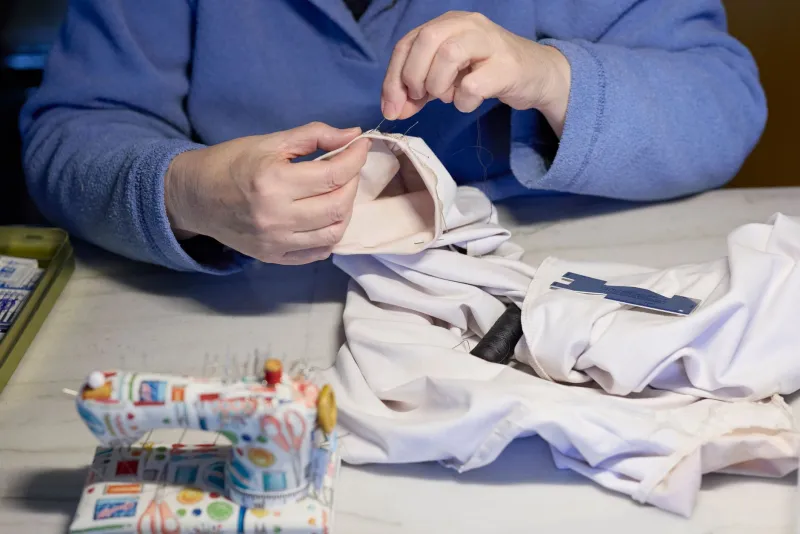
There's a particular kind of grief that comes with a failing seam on a coat you've worn for a decade. The lining splits, the collar frays at one corner, a pocket starts to gape — and suddenly something that felt like a second skin becomes unwearable. Most of us, at that point, do one of two things: stuff it in a bag destined for the charity shop, or shove it to the back of the wardrobe with vague intentions of sorting it out someday.
But across Britain, there's another option — one that's been quietly practised for generations and is now, finally, having its cultural moment. Independent tailors and alteration specialists are rebuilding garments from the inside out, and they're doing it with a level of craft that factory production simply cannot replicate.
The Difference Between Mending and Mastery
Let's be honest: visible mending has had its well-deserved time in the spotlight. The sashiko-stitched jeans, the darned elbows worn with pride — there's real value in that approach, both creatively and philosophically. But professional tailoring occupies a different space entirely. It's not about making the repair part of the aesthetic. It's about understanding how a garment was constructed in the first place, and then working with — or sometimes around — that original architecture.
Sophie Hartley, who runs a small alterations studio in Hebden Bridge, puts it plainly. "When someone brings me a jacket that's been in their family for thirty years, I'm not just fixing a tear. I'm reading the whole garment. How it was cut, where it's been stressed, what the fabric can and can't take. You can't rush that."
Sophie trained under a tailor in Leeds before setting up on her own a decade ago. Her client list now includes everyone from fell walkers needing their wax jackets re-waxed and re-stitched, to professional women who've found a vintage blazer in a dead relative's wardrobe and want it altered to actually fit. The work is technically demanding, emotionally loaded, and — she's quick to point out — almost never quick.
What Professional Tailoring Actually Involves
There's a common misconception that taking something to a tailor is just about hemming trousers or taking in a waist. In reality, the scope of what skilled alterations specialists can do is remarkable.
Re-lining a coat, for instance, involves completely removing the original lining, often repairing the shell fabric beneath, sourcing a compatible new lining (ideally something natural — silk, cotton, bamboo), and then reconstructing the interior by hand. It can take the better part of a day. Similarly, collar replacements on shirts or jackets require the kind of precision cutting that leaves no margin for error — the collar is almost always the first thing the eye goes to, and any inconsistency in grain or tension will show immediately.
Then there are structural repairs: reinforcing the canvas in a bespoke jacket, replacing a broken zip in a leather piece, or rebuilding a shoulder seam that's given way under years of wear. These aren't cosmetic fixes. They're interventions that change the structural integrity of a garment.
Marcus Webb, a Savile Row-trained tailor now operating his own studio in Bristol, describes his work as "diagnostic as much as it is remedial." Before he picks up a needle, he spends time with a garment examining how it moves, where it's pulling, what the original maker intended. "Most people think they know what's wrong," he says. "They'll say 'the shoulder's dropped' when actually the issue started at the side seam. You have to trace it back."
The Investment Question
Here's where some people hesitate. Professional alteration isn't cheap — nor should it be. Skilled labour, quality thread, compatible fabric sourcing, and the time it takes to do the job properly all contribute to a cost that can feel surprising if you're used to fast fashion pricing.
But frame it differently. A well-made coat, properly cared for and professionally repaired when needed, can last forty years. The maths, when you stretch it out that way, become considerably more favourable. And there's an environmental argument that's hard to ignore: the carbon cost of producing a new garment — even a "sustainable" one — almost always exceeds the environmental footprint of repairing what already exists.
Sophie estimates that around 70% of the garments people bring to her are things they "couldn't bear to get rid of." A mother's wedding outfit. A leather jacket bought on a trip abroad. A hand-knitted jumper from a grandmother who's no longer around. These aren't items with a market value. They have something more durable than that.
"People come to me when something matters," she says. "That changes how I work on it."
Finding the Right Hands for Your Clothes
Not all tailors are equal, and not all alterations specialists have the same skill set. Some are brilliant at straightforward size adjustments but less experienced with structural repairs. Others specialise in particular fabrics — leather, knitwear, or tailored wool — and may not take on everything.
When looking for someone to work on a cherished piece, it's worth asking a few direct questions. Can they show you examples of similar work? Do they source their own materials, or will they ask you to supply fabric? How do they handle garments where the original fabric is no longer available? A good tailor will be honest about the limits of what's possible and won't take on work they can't do well.
Local recommendations still carry real weight here. Dry cleaners often have relationships with trusted alterations specialists. Independent fabric shops — particularly those stocking natural and artisan textiles — tend to know who's doing quality work in their area. And increasingly, tailors with a strong ethical focus are building their presence online, sharing their process and their results in ways that make it easier to judge their capabilities before you commit.
A Different Kind of Luxury
There's a reframing happening in British fashion — slow, but perceptible. The idea that luxury means new, expensive, and brand-stamped is losing ground to something older and arguably more meaningful: the luxury of quality that endures.
A garment that has been repaired by someone who genuinely understands it carries a different kind of value. It has a story that's still being written. The coat with the rebuilt lining, the jacket with the replaced collar, the dress that was let out and re-hemmed and worn again — these are clothes with lives, not just lifespans.
At Wildewood, we've always believed that the most beautiful things are the ones made with intention and kept with care. The tailors doing this work are part of that same tradition — craftspeople who understand that what we wear matters, and that looking after it properly is a form of respect. For the maker, for the material, and for the planet that provided both.
Your wardrobe deserves hands like theirs.