Less Is More: The British Makers Who Chose Craft Over Scale
There's a moment in every small maker's story where the offer arrives. A larger stockist, a bigger order, a nudge toward a production run that would finally — finally — make the numbers look comfortable. And then, more often than you might expect, the answer comes back: no thank you.
It's not stubbornness. It's not naivety about how business works. It's something altogether more considered — a deliberate, sometimes painstaking choice to keep things small, slow, and rooted in the kind of quality that simply cannot survive a factory floor.
Across Britain right now, a quiet but meaningful shift is happening in the way handcrafted makers think about output. And the ripple effects are reaching well beyond the workshop.
The Maths Behind Making Slowly
On the surface, small batch production looks like a losing strategy. You spend more time on each piece. You can only sell what you can physically make. You turn away custom during busy seasons. The conventional business logic doesn't stack up — at least not until you look at what gets sacrificed the moment you scale.
Sarah, a textile maker based in the Cotswolds who produces hand-block-printed linen in runs of no more than forty metres at a time, puts it plainly: "The minute I start rushing, the registration goes off. The colours don't sit right. You can feel it in the cloth — there's a tension that wasn't there before. Customers who've bought from me for years would notice immediately."
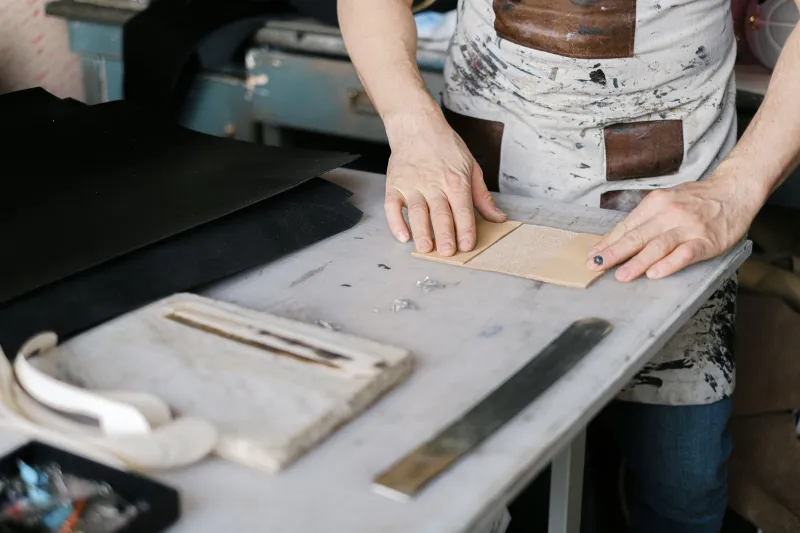
That sensitivity to quality isn't precious or performative. It's the entire point. When you're working with natural dyes, heritage looms, or hand-stitched construction, speed is genuinely the enemy of the result. The technique demands time, and time, in this context, is the product.
For many British artisans, the economics have been reframed entirely. Rather than asking how many can I make, the question has become how few do I need to make to sustain this work without compromising it. It's a subtle but transformative distinction.
What Scarcity Actually Means
The word "scarcity" gets thrown around a lot in fashion — usually as a marketing device, a manufactured urgency designed to move stock. But the scarcity that small batch makers are talking about is something entirely different. It's structural. It's honest. And it comes with a completely different emotional weight.
When a Harris Tweed weaver produces a limited run of cloth on a traditional floor loom, the limitation isn't a strategy — it's the reality of the process. Each metre takes hours. The warp has to be set by hand. There are no shortcuts that don't show up in the finished weave. The scarcity is baked in from the first thread.
Jamie, a saddler and bag maker working out of a small workshop in Shropshire, describes the shift in how his customers have started to relate to waiting: "I've got a six-month lead time right now, and I used to apologise for it. Now people come to me because of it. They want to know the thing they're buying took that long. It changes how they feel about owning it."
That shift in consumer expectation is significant. A growing number of buyers — particularly in the UK, where there's a deep cultural respect for craft heritage — are actively seeking out makers who can't deliver overnight. The wait has become part of the value.
Technique as the Limiting Factor
One of the most compelling arguments for deliberate slowness is what gets preserved when you refuse to speed up. Traditional techniques are extraordinarily fragile. They exist in the hands of the people who practise them, passed down through apprenticeship, repetition, and patient observation. The moment those techniques are adapted to suit a faster production line, something essential is lost — and often, it can't be recovered.
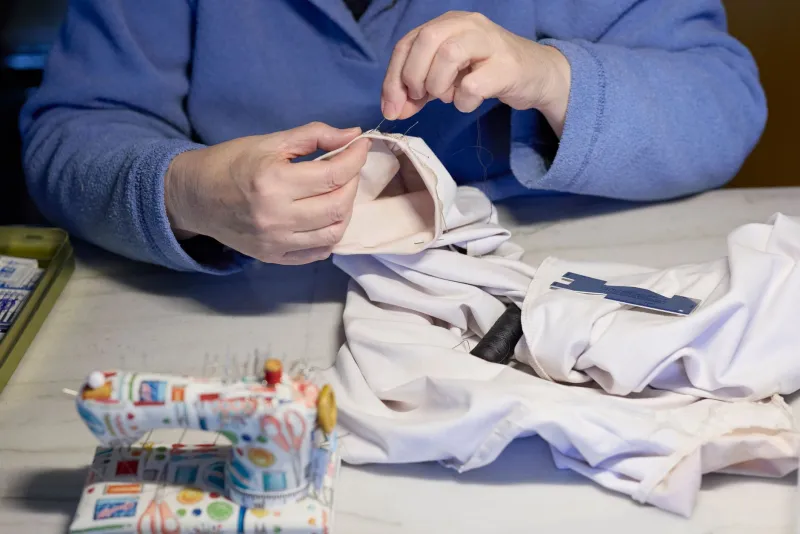
Natural indigo dyeing, smocking, hand-cut tailoring, traditional bobbin lace — these are not processes that can be meaningfully accelerated. They are the pace. And the makers who hold them are, in a very real sense, custodians of something that has no digital backup.
Emma, a hand-knitter based in rural Yorkshire who works exclusively with British breed wool, produces perhaps forty garments in a good year. Each one is a different colourway, a slightly evolved construction. "I'm not interested in repeating myself endlessly," she says. "Every piece teaches me something. If I were trying to make four hundred, I'd stop learning."
That commitment to ongoing craft development — to the idea that the maker should be growing alongside the work — is something that mass production structurally prevents. When output becomes the goal, the maker becomes the machine.
Reshaping What Value Looks Like
There's an uncomfortable truth at the heart of all this: slow, small batch fashion costs more. Not because makers are being precious about their margins, but because the time, skill, and materials involved genuinely add up. A hand-stitched jacket from an independent British tailor will always cost more than a high street equivalent. There's no way around it.
But the conversation around value in British fashion is shifting. The "cost per wear" argument — that a well-made piece worn hundreds of times is cheaper in the long run than fast fashion replaced every season — has moved from niche sustainability circles into something closer to mainstream acceptance. People are beginning to think in decades rather than seasons.
More than that, there's an emotional economy at play. The knowledge that a garment was made slowly, by someone who cared, in a quantity small enough to remain meaningful — that knowledge changes the relationship between the wearer and the thing they wear. It becomes harder to discard. Easier to repair. Worth passing on.
Sarah from the Cotswolds describes customers who've come back to her years after their first purchase, not to buy something new, but to show her how well the original piece has aged. "That's the feedback that matters," she says. "Not the number of orders. The fact that it's still going."
A Different Kind of Growth
None of this means British craft makers are standing still. Many are growing — just not in the ways conventional business metrics tend to measure. They're deepening their technique. Sourcing better materials. Taking on one or two apprentices rather than a warehouse of staff. Building communities of loyal customers who understand and share the values behind the work.
This is a kind of growth that fashion rarely celebrates, but perhaps should. It's resilient, rooted, and remarkably good at surviving the upheavals that periodically flatten larger operations. Small batch makers don't have unsold stock piling up in warehouses. They don't chase trends that leave them overexposed. They make what they make, they make it well, and they find the people who appreciate the difference.
In a culture that has spent decades equating more with better, watching makers choose less — and watching that choice resonate with an increasingly thoughtful buying public — feels like something worth paying attention to.
The weight of quality, it turns out, is something you can feel in your hands. And once you've felt it, it's very hard to settle for anything lighter.