Worn In, Not Worn Out: The British Leather Makers Bringing Back the Art of Slow Tanning
There's a particular kind of beauty that only reveals itself over time. A leather belt that deepens from pale tan to rich amber after a summer of wear. A satchel that moulds itself to the curve of your shoulder over months of daily use. A pair of boots that carry the memory of every lane you've ever walked down. This is what slow leather looks like — and it's something that a new wave of British artisans is working very hard to bring back.
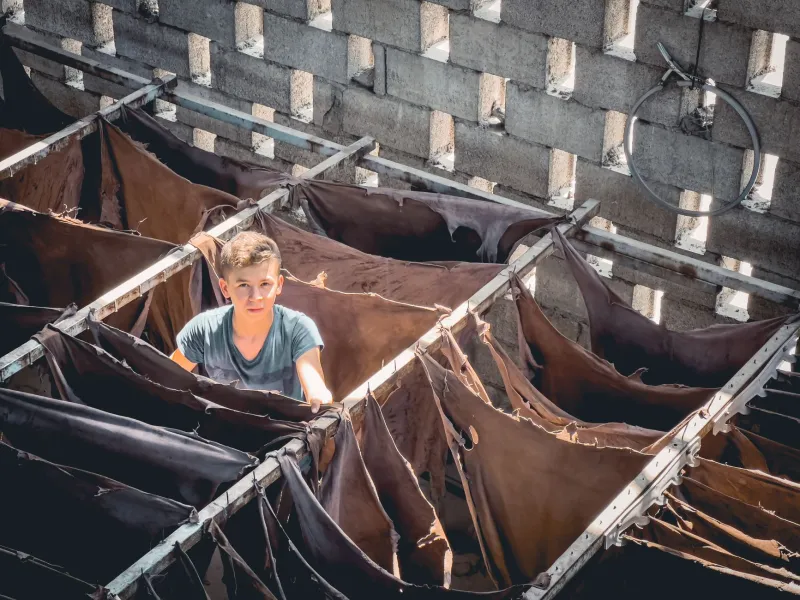
While fast fashion churned out synthetic bags and chrome-tanned accessories designed to look good on a shelf and fall apart within a season, a quieter story was unfolding in small workshops from Somerset to the Scottish Borders. Craftspeople were returning to vegetable tanning, an ancient process that uses natural tannins derived from tree bark — oak, chestnut, mimosa — to cure hides over weeks and months rather than hours. The results are extraordinary. And once you understand what goes into making a piece of slow leather, it becomes almost impossible to go back.
What Actually Is Vegetable Tanning?
Most leather you encounter today — in high street bags, cheap belts, fast fashion footwear — is chrome-tanned. It's a chemical process developed in the nineteenth century that can transform a raw hide into usable leather in under a day. It's efficient. It's consistent. And it produces a soft, pliable material that photographs well and costs relatively little to make.
But chrome tanning comes with a significant environmental cost. The chemicals involved are hazardous, the wastewater generated is toxic, and the resulting leather doesn't biodegrade cleanly at the end of its life. More than that, chrome-tanned leather doesn't age the same way. It doesn't patina. It doesn't tell a story. It just... deteriorates.
Vegetable tanning is the alternative that predates all of this by thousands of years. Hides are submerged in pits of increasingly concentrated tannin solution — a process that can take anywhere from a few weeks to over a year depending on the thickness of the hide and the intended end use. The tannins bind with the collagen fibres in the leather at a molecular level, producing a material that is firm, dense, and almost incomparably durable. It breathes. It moves with you. And crucially, it develops a patina over time that is entirely unique to the person who uses it.
The Tanneries Still Standing
Britain was once home to hundreds of tanneries. Every market town had one, usually positioned near a river for the water supply and ideally downwind of everything else. By the late twentieth century, that number had dwindled to almost nothing as industrial processes and cheaper imports made traditional tanning economically unviable.
But a small number of tanneries survived. J. & F.J. Baker in Devon is perhaps the most remarkable — still operating on the same site since 1862, still using oak bark from local woodlands, still running some of the oldest tanning pits in continuous use anywhere in the world. Their leather is used by saddlers, cobblers, and artisan makers across Britain and beyond. Walking through their yard is like stepping into a working archive of how things were done before shortcuts became the norm.
Further north, newer operations are emerging alongside the old guard. Small-batch leather workers in Yorkshire, Northumberland, and the Welsh Marches are sourcing vegetable-tanned hides from these surviving tanneries and turning them into finished goods using techniques that are every bit as considered as the tanning process itself. Hand-stitched edges. Burnished surfaces worked with bone tools. Hardware sourced from British metalworkers. Nothing is rushed. Nothing is wasted.
The People Behind the Pieces
Spend any time in this community and you quickly notice a particular kind of person. They tend to be thoughtful, deeply knowledgeable, and slightly evangelical about the material they work with. They'll happily spend twenty minutes explaining why a particular hide from a particular tannery is ideal for a specific type of bag. They care about provenance in a way that goes beyond marketing.
Many came to leather working via other craft traditions — bookbinding, saddlery, shoemaking — and brought those disciplines' exacting standards with them. Others arrived from entirely different careers, drawn by a desire to make things that last and to understand the full story of what they were making. What they share is a commitment to working slowly, working honestly, and producing pieces that will outlast almost anything else in your wardrobe.
The goods they create — belts, wallets, tote bags, card holders, journal covers, boots — are priced accordingly. A hand-stitched vegetable-tanned leather belt from a British maker might cost £80 to £150. That can feel like a lot compared to a high street equivalent. But consider that the high street version will likely last two or three years at best, while a well-made piece of slow leather, properly cared for, can genuinely last decades. The maths, once you do it honestly, tells a very different story.
Learning to Read Your Leather
One of the things that makes vegetable-tanned leather genuinely special is the way it communicates with you over time. Scratches that initially alarm you will buff out or blend into the overall patina. Areas of frequent contact — the buckle point on a belt, the handles of a bag — will darken and smooth. The leather remembers how you use it and adjusts accordingly.
This is the opposite of disposable. This is an object that becomes more itself the longer you have it. And there's something profoundly satisfying about that relationship — about owning something that improves with age rather than deteriorating from the moment you take it out of the box.
Proper care is simple: occasional conditioning with a good quality natural wax or oil, kept away from prolonged soaking, allowed to dry slowly if it does get wet. That's genuinely it. No specialist treatments, no expensive products. Just basic attention.
Why This Matters Right Now
In a fashion landscape still dominated by the logic of newness — buy more, buy cheaper, replace often — slow leather represents a quiet but meaningful act of resistance. Choosing a hand-tanned belt over a fast fashion one isn't just an aesthetic decision, though the aesthetic rewards are considerable. It's a vote for a different kind of economy, one where makers are paid fairly, where materials are sourced responsibly, and where the things we own are built to last.
British vegetable tanning is also part of a broader story about what this country's craft heritage actually looks like when it's allowed to survive and evolve. The tanneries that kept going through the lean decades, and the makers who sought them out, have preserved something genuinely irreplaceable. The leather coming out of those workshops carries that history in every fibre.
At Wildewood, we believe the most beautiful things are the ones that carry a story. And there are few things in fashion that tell a richer one than a piece of slow leather, worn in over years, shaped by a life actually lived. That's not just an accessory. That's craft in its truest sense.