Willow, Rush, and Cane: The Ancient British Craft That's Quietly Reinventing the Fashion Accessory
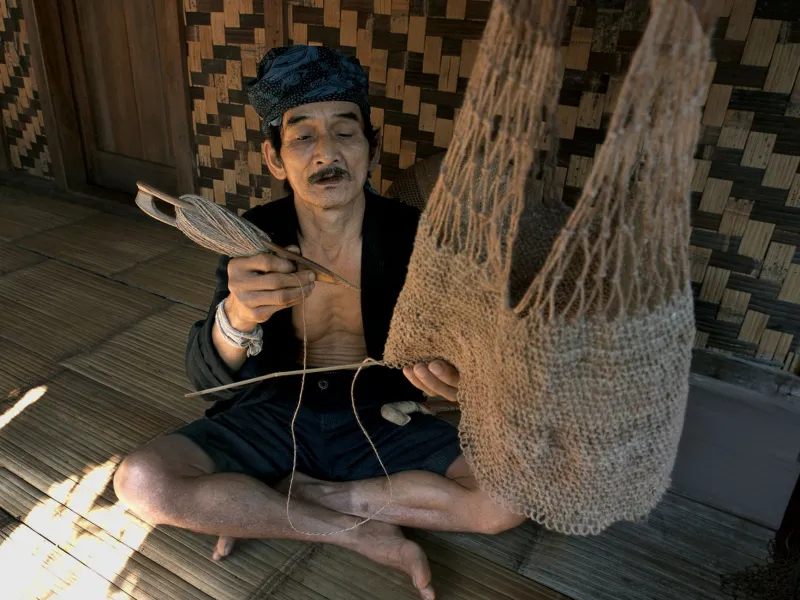
There's a particular kind of satisfaction in holding something made entirely by hand from a material that grew in the ground. No injection moulding. No petroleum-derived polymers. No factory floor hum. Just a person, a bundle of freshly harvested willow rods, and a technique passed down through generations of British craftspeople who understood, long before the word 'sustainability' entered the fashion lexicon, that the best materials are the ones the earth can take back.
Basketry is one of the oldest crafts on the planet — older than pottery, older than weaving cloth — and in Britain it has a particularly deep-rooted history. The Somerset Levels have been producing basket-grade willow for over a thousand years. The Norfolk Broads gave rise to generations of rush weavers. Cane workers once dotted every market town. For most of the twentieth century, cheap imports and changing tastes pushed those traditions to the margins. But something has shifted. Walk into the right boutique, browse the right independent maker's Instagram, or turn up at the right craft fair in the Cotswolds, and you'll find basketry not just surviving — but genuinely thriving, and doing so right at the intersection of fashion and environmental conscience.
From the Somerset Levels to Your Shoulder
The revival isn't happening in a vacuum. It's being driven by a generation of makers who came to basketry through circuitous routes — via art school, via burnout from corporate careers, via a growing unease with the throwaway culture that dominates mainstream retail.
Take makers like those working out of small studios in Somerset and the Welsh Borders, who are producing structured willow bags that look, at first glance, like something you might find on the arm of a Parisian market-goer in the 1940s. Closer inspection reveals something more considered: tight, even weaves in locally harvested buff willow, leather handles sourced from British tanneries, linings cut from deadstock fabric. These aren't rustic curiosities. They're proper accessories, built to last decades.
The willow itself matters enormously. Grown in the damp flatlands of Somerset — the same landscape that has been cultivating basket willow since medieval times — it's harvested annually, dried, and sorted by grade. Different varieties produce different characteristics: some rods are fine and flexible, suited to intricate detailing; others are stouter, better for structural work. Learning to read the material, understanding how it behaves wet versus dry, tight versus loose — that knowledge takes years to accumulate, and it's precisely this depth of craft knowledge that distinguishes handmade basketry from anything a machine could replicate.
Rush, Raffia, and the Broader Basket Family
Willow isn't the only player in this story. Rush — harvested from the margins of rivers and lakes — has its own long British tradition, and contemporary makers are finding fresh applications for it in everything from woven belts to structured evening bags. Rush has a softness that willow lacks, a slight give that makes it particularly appealing for items worn close to the body.
Raffia, technically imported (it comes from the raffia palm, native to Madagascar and parts of Africa), has also found its way into the work of British basketry-influenced designers, often blended with domestic materials to create accessories that sit somewhere between the artisanal and the fashion-forward. The key, for makers who care about provenance, is sourcing raffia that's been harvested responsibly and traded fairly — increasingly possible as supply chains become more transparent.
Cane, meanwhile — the split outer skin of rattan — brings its own aesthetic. Finer and more uniform than willow, it lends itself to tighter, more geometric patterns. Several British makers are using it to produce belts and bag straps with a precision that wouldn't look out of place alongside high-end leather goods.
Why Fashion Is Finally Paying Attention
For years, the fashion industry's response to the sustainability problem in accessories was to swap one synthetic for another — polyester lining replaced with recycled polyester, PVC handles swapped for bio-based plastics. These are incremental improvements, but they don't fundamentally challenge the logic of a system built on disposability.
Basketry does. A well-made willow bag is biodegradable at end of life. The raw material is a renewable crop. The production process requires no energy-intensive machinery, no chemical treatments, no dyes unless the maker chooses to add them (and increasingly, those who do are reaching for natural options). The carbon footprint of a hand-woven accessory made from locally grown willow is, by any reasonable measure, a fraction of its factory-made equivalent.
There's also the question of longevity. Basketry, done properly, is extraordinarily durable. Museum collections across Britain hold examples of willow work that are hundreds of years old and still structurally sound. A bag made to the same standard today, maintained with the same basic care you'd give to any quality accessory, should last a lifetime — and probably longer.
Learning the Weave
One of the most encouraging aspects of the basketry revival is how openly its practitioners share their knowledge. Workshops run by makers across England, Scotland, and Wales have waiting lists. Online tutorials have introduced the basics of stake-and-strand weaving to thousands of people who've never held a willow rod. The Basketmakers' Association — a UK body that's been supporting the craft since the 1970s — has seen renewed interest from younger members in recent years.
This openness feels important. It runs counter to the kind of mystification that can sometimes surround artisanal crafts, the sense that real skill is something guarded and gatekept. Basketry, at its heart, is democratic. The materials are relatively affordable. The tools are minimal. The techniques, while genuinely demanding to master, are accessible to anyone willing to put in the hours. And there's something quietly radical about a craft that encourages people to make their own things rather than simply buy them.
The Accessory as Argument
When you carry a handwoven willow bag, you're making a statement — though probably not a loud one. Basketry doesn't shout. It doesn't carry logos or signal status in the way that a recognisable brand name might. What it does is invite a different kind of conversation: about where things come from, how they're made, who made them, and what it means to own something that has a genuine story behind it.
In a fashion landscape still dominated by fast cycles and synthetic shortcuts, that feels like a genuinely meaningful alternative. Not a nostalgic retreat into the past, but a considered reimagining of what accessories could be — rooted in the landscape, made with skill, and built to outlast the season that produced them.
The willow is growing. The makers are weaving. And the case for choosing craft over convenience has rarely felt more compelling.